
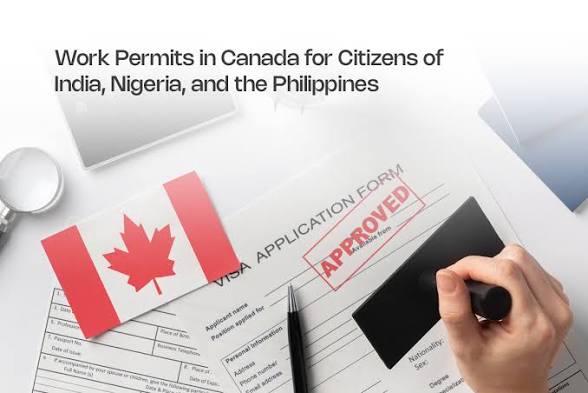
Navigating the world of work visas can be daunting. Whether you are a skilled professional seeking new opportunities, an entrepreneur looking to launch a startup, or an employer hoping to hire global talent, understanding the intricacies of immigration law is crucial. This comprehensive guide breaks down everything you need to know about work visas, from the basic definitions to country-specific pathways.
What is a Work Visa?
A work visa is an official authorization granted by a government that allows a foreign national to enter, reside, and legally work in a host country for a specific employer or period . Unlike a tourist visa, which strictly prohibits employment, a work visa is the legal bridge connecting global talent with local labor markets. It ensures compliance with immigration and labor laws while enabling companies to access a broader talent pool .
General Characteristics of Work Visas
· Tied to Employment: In most cases, work visas require a confirmed job offer from an approved employer .
· Limited Duration: They usually come with a time limit, ranging from months to years, requiring renewal or status changes upon expiration .
· Employer Specificity: Many visas are tied to the sponsoring employer. If you wish to change jobs, you often must reapply for a new visa or obtain government approval .
· Skill-Based: Many countries offer visas primarily for roles in high-demand sectors like IT, healthcare, engineering, and finance .
Country-Specific Work Visa Pathways
Work visa rules vary dramatically depending on the destination. Here is a look at some key jurisdictions.
- Singapore Work Passes
Singapore offers a structured framework for foreign workers, categorized by skill level and profession. All foreigners must hold a valid pass before starting work .
For Professionals:
· Employment Pass (EP) : For foreign professionals, managers, executives, and technicians. Candidates need to earn a qualifying salary (at least S$5,600 for most sectors, S$6,200 for financial services) and pass the COMPASS (Complementarity Assessment Framework) points system .
· EntrePass: For foreign entrepreneurs looking to start and operate a business in Singapore that is venture-backed or possesses innovative technologies .
· Personalised Employment Pass (PEP) : For high-earning existing EP holders or overseas professionals seeking greater flexibility than the standard EP .
· Overseas Networks & Expertise Pass (ONE Pass) : For top talent in business, arts, sports, academia, and research .
For Skilled Workers and Others:
· S Pass: For skilled workers earning at least S$3,300 per month .
· Work Permit: For semi-skilled migrant workers in construction, manufacturing, or domestic services .
· Trainees and Students: Includes the Training Employment Pass and Work Holiday Passes for students and graduates .
- Nigeria Work Visas & Permits
Nigeria is a prominent destination for expatriates in sectors like oil & gas, telecommunications, and finance. The Nigerian Immigration Service (NIS) strictly regulates foreign employment .
Two Primary Categories:
- Subject to Regularization (STR) Visa: This is the long-term work visa. It is issued to expatriates who have a job offer from a Nigerian company that holds an approved Expatriate Quota . Upon arrival, the holder must apply for the CERPAC (Combined Expatriate Residence Permit and Aliens Card), which serves as the residence permit and allows work .
- Temporary Work Permit (TWP) : This is for short-term assignments, such as machine installation or equipment repair, typically valid for up to 90 days and often renewable .
Key Requirement: The Expatriate Quota is mandatory. Companies must prove that no suitable Nigerian citizen is available for the role before they can hire a foreigner .
- United States Work Visas
The U.S. has a complex system with various categories based on occupation and intent .
· H-1B Visa: For specialty occupations requiring a bachelor’s degree (tech, engineering, finance). Subject to an annual cap of 65,000 (plus 20,000 for master’s degree holders) and a lottery system .
· L-1 Visa: For intra-company transfers (managers or specialized knowledge) .
· O-1 Visa: For individuals with extraordinary ability in sciences, arts, education, business, or athletics .
· Permanent Visas (Green Cards) : Categories like EB-2 and EB-3 require employer sponsorship and a labor certification process .
- United Kingdom & Europe
· UK Skilled Worker Visa: Allows qualified professionals to work in the UK if they have a job offer from an approved sponsor and meet salary thresholds. It allows supplementary work (up to 20 hours) in the same sector or shortage occupation, potentially including self-employment .
· Germany (EU Blue Card) : For highly skilled non-EU workers with a job offer and a minimum salary threshold, offering a path to permanent residency .
The Employer’s Role: How to Sponsor a Work Visa
Visa sponsorship is a legal mechanism where an employer supports a foreign national’s application. It is a significant responsibility and a business enabler .
- Determine Eligibility
Employers must be legally registered entities. They must verify that the role qualifies (e.g., “specialty occupation” in the U.S.) and that the salary meets the prevailing wage to avoid negatively impacting local labor markets .
- Secure Approvals (Labor Market Tests)
In many countries, employers must prove they attempted to recruit locally before offering a job to a foreigner. In the U.S., this often involves obtaining a certified Labor Condition Application (LCA) from the Department of Labor . In Nigeria, this involves securing the “Expatriate Quota” .
- Required Documentation
While specific documents vary, employers generally need to prepare:
· Job Offer & Contract: A signed employment contract detailing duties, salary, and duration .
· Company Documents: Registration documents, tax records, and justification for hiring a foreigner .
· Employee Documents: Valid passport, educational certificates, CV, and police clearance .
- Submission & Compliance
The application is often submitted to the immigration authority (e.g., USCIS, MOM, NIS). Once approved, the employee receives a visa stamp. The employer remains responsible for reporting changes in employment status to immigration authorities .
Application Process: Step-by-Step
- Secure a Job Offer: You cannot usually apply without a confirmed offer from an employer willing to sponsor you .
- Identify the Visa Type: Check the official immigration website of the target country to find the specific visa category for your situation .
- Gather Documents: Compile your passport (valid for at least 6 months), contract, certifications, medical records, and police clearance .
- Submit Application: This may be done online, by the employer, or at an embassy/consulate. Pay the required fees .
- Attend Appointment: Many countries require biometrics or an interview at a visa application center .
- Wait for Processing: Timelines can range from a few weeks to several months. Start early (ideally 3-4 months before your start date) .
Special Considerations & Tips
Dependents and Family
Many countries allow work visa holders to bring family members.
· Spouses and Children: They may qualify for Dependant’s Passes or Long-Term Visit Passes (e.g., in Singapore) .
· Work Rights for Dependents: In some jurisdictions, dependents may apply for a Letter of Consent to work, but in others (e.g., Nigeria), “B” class residents are not permitted to work .
The Reality of “Sponsored” Visas
It is a common misconception that the employer pays for everything. While the employer sponsors your employment, the visa application fees and healthcare/education costs often remain the responsibility of the applicant . Additionally, most sponsored visas tie you to a specific employer; changing jobs usually restarts the process .
Consequences of Non-Compliance
Working without proper authorization can lead to severe penalties, including fines, deportation, and bans on future entry. Employers hiring undocumented workers also face legal consequences
Conclusion
Securing a work visa is a multi-step process that requires meticulous planning, patience, and close cooperation between employer and employee. By understanding the specific pathways available in your desired destination—whether it be Singapore, Nigeria, the U.S., or the UK—you can navigate the complexities of international employment successfully. Always refer to official government sources for the most current information.