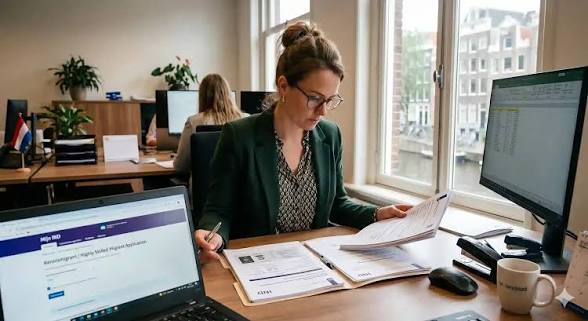

The Netherlands is experiencing a severe labor shortage in its construction industry. This has led to a high demand for foreign workers, with many Dutch construction companies actively sponsoring visas and offering attractive relocation packages. If you are a skilled tradesperson looking to build a career in Europe, construction jobs in the Netherlands with free visa sponsorship are a realistic and promising opportunity for 2026.
Why the Netherlands Needs Foreign Construction Workers
The Dutch construction sector is booming, but the workforce cannot keep up with demand. Companies like Heijmans, a major Dutch construction firm, have implemented aggressive hiring programs for foreign workers. Over the past two years, Heijmans has hired 60 refugees with residency permits and aims to expand that number to 100. The entire industry is scouring the European Union for talent before looking further abroad, creating a highly competitive market for skilled labor.
The Dutch government supports hiring foreign workers. While the official process requires employers to prove they cannot find suitable candidates within the EU/EER or Switzerland first, the severe labor shortage makes this easier. This benefits non-EU applicants as employers are more willing to sponsor permits and cover associated costs.
Understanding the “Free Visa” Promise
The phrase “free visa” is critical to understand. For non-EU citizens, the employer typically sponsors the work permit, which means they pay the application fees and handle the bureaucratic process. This makes the visa “free” for the employee.
The primary visa route for construction workers is the GVVA (Gecombineerde Vergunning voor Verblijf en Arbeid), which is a combined residence and work permit. This allows you to live and work in the Netherlands for the duration of your contract, usually up to two years.
The process involves:
· Employer Sponsorship: The employer must apply for your GVVA. It is illegal to apply independently.
· Labor Market Test: The employer must first attempt to fill the role with an EU citizen. This takes about three months, which your employer manages.
· Documentation: You will need a valid passport, a clean criminal record, proof of qualifications, and a signed employment contract.
Once the GVVA is granted, you can enter the Netherlands and begin the registration process for your BSN (tax number) and a Dutch bank account.
Which Construction Jobs Are In Demand?
The skills gap in the Netherlands is broad, covering many trades. The following roles are particularly in demand, offering the best opportunities for visa sponsorship:
· Skilled Trades: Carpenters, masons, concrete finishers, and demolition workers.
· Supervisory Roles: Construction supervisors and site managers, often requiring 3-10 years of experience.
· Engineering Roles: Civil engineers, structural engineers, and technical developers.
· Specialized Roles: Offshore construction managers and construction robot operators.
Salary Expectations for 2026
Salaries in the Dutch construction sector are strong and standardized by the Bouw & Infra CAO (Collective Labor Agreement). This agreement ensures fair pay, overtime rates, and holiday allowances.
· Entry-Level (21+): The minimum wage is approximately €14.40–14.80 per hour.
· Skilled Trades (Groep 3-4): Vakman A and B can expect €19.00–21.50 per hour. This translates to an annual gross salary between €42,000 and €48,000 including holiday allowance.
· Supervisory (Groep 6-7): Voormannen and Uitvoerders earn €24.00–28.50 per hour, pushing annual earnings toward €60,000 gross.
Total employer costs for hiring a foreign worker can range between €6,100 and €6,730 per month, reflecting contributions to social security and pension.
Qualifications and Safety Certifications
To get a construction job in the Netherlands and secure a visa, you need:
- VCA Certificate: This is essential. The VCA (Safety, Health, and Environment Checklist for Contractors) proves your knowledge of workplace safety. The VCA exam is available in multiple languages, including English, Polish, Arabic, Turkish, and Hindi, making it accessible to international workers.
- Trade Certificates: Formal qualifications and proof of work experience are required for trade-specific roles.
- Language: While Dutch is not mandatory, English is often a requirement to pass the VCA and integrate into international teams.
How to Secure a Construction Job with a Free Visa
- Target Your CV: Highlight your trade experience and qualifications. Emphasize any VCA certification you have.
- Use Recruitment Agencies: Platforms like Work in the Netherlands specialize in connecting EU and international workers with employers. They can assist with housing, registration, and securing your BSN.
- Apply Directly: Research major Dutch contractors like Heijmans, TMC, Dornan, and BAM. Check their career pages for international roles.
- Prepare for the Process: The timeline from application to arrival takes about 2 months for skilled workers.
Conclusion
Construction jobs in the Netherlands with free visa sponsorship are one of the best opportunities for skilled workers in 2026. With salaries exceeding €20 per hour, a booming industry, and a clear legal pathway, the Netherlands offers a secure and lucrative future. Your success depends on securing employer sponsorship, obtaining your VCA certification, and navigating the application process with professional support.