
Canada remains one of the world’s top destinations for skilled workers, students, and families seeking a new life. With over 80 immigration pathways, the process can feel overwhelming—but understanding your options is the first step to success. In 2026, significant changes to Express Entry and ongoing Provincial Nominee Program (PNP) expansions are reshaping how candidates qualify. This comprehensive guide covers every major pathway, recent policy updates, and actionable steps to help you navigate your journey to Canadian permanent residency (PR).
- What is Canadian Permanent Residency?
Canadian PR status gives you the right to live, work, and study anywhere in Canada (outside Quebec, which has its own selection system). As a permanent resident, you enjoy most of the same rights as Canadian citizens, including access to healthcare and social services. However, you must meet the residency obligation: physically present in Canada for at least 730 days (two years) out of every five-year period. Failure to meet this requirement can result in losing your status.
- Express Entry: Canada’s Flagship Immigration System
The Express Entry system is the primary route for skilled workers. It’s not a program itself but a pool that manages applications for three federal economic programs:
· Canadian Experience Class (CEC) – For those with Canadian work experience.
· Federal Skilled Worker Program (FSWP) – For skilled workers with foreign experience.
· Federal Skilled Trades Program (FSTP) – For qualified tradespeople.
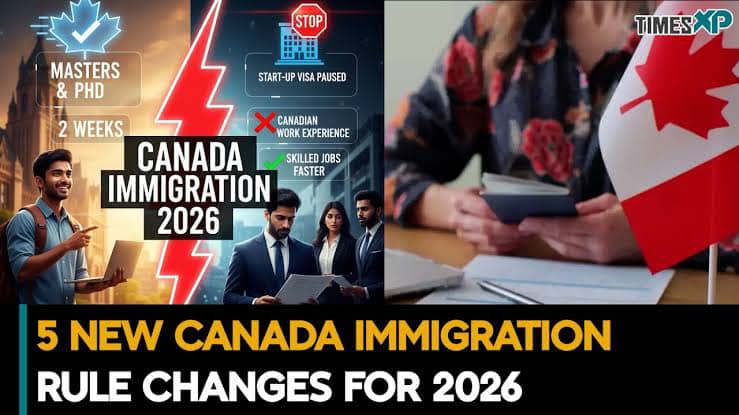
In 2026, major reforms are being proposed that would merge these three programs into one unified stream with standardized requirements.
How It Works
- Create a Profile: Determine eligibility under at least one program and submit an Express Entry profile.
- Get a CRS Score: You receive a Comprehensive Ranking System (CRS) score based on age, education, work experience, language skills, and other factors.
- Receive an ITA: Candidates with the highest scores receive an Invitation to Apply (ITA) during regular draws.
2026 Proposed Express Entry Changes
If implemented, these reforms will significantly alter the landscape:
· Unified Eligibility: All candidates would need one year of cumulative skilled work experience (Canadian or foreign) in the last three years and a minimum language score of CLB 6.
· New “High-Wage Occupation” Factor: Points may be awarded for Canadian work experience or a job offer in an occupation paying above the national median wage, with higher tiers for wages 1.3x, 1.5x, and 2x the median.
· Points Removed: Factors considered “weaker predictors of economic success” would lose points, including having a sibling in Canada, Canadian study credentials, and French proficiency bonuses.
· New Category for Senior Managers (NOC 00): A dedicated draw category for senior managers with at least 12 months of Canadian work experience, helping those over 35 who face age-related CRS penalties.
Important: These changes are proposed and undergoing public consultations. While not final, they indicate a shift toward prioritizing higher earnings and job offers over Canadian education or family ties.
- Provincial Nominee Program (PNP): A Strategic Alternative
If your CRS score is too low for Express Entry, the Provincial Nominee Program (PNP) offers a powerful alternative. Provinces and territories nominate candidates based on local labor market needs. A provincial nomination adds 600 CRS points, virtually guaranteeing an ITA.
Two PNP Pathways
- Enhanced PNP: Linked to Express Entry. Faster processing (approx. 8-10 months total).
- Base PNP: Apply directly to the province, outside Express Entry. Slower federal processing (approx. 18-25 months).
Key PNP Streams (2026 Priorities)
· Ontario: Human Capital Priorities – invites candidates in tech, healthcare, and other priority fields without requiring a job offer.
· Saskatchewan: Express Entry sub-category – often nominates based solely on skills and profile.
· British Columbia, Alberta, Manitoba: Each have streams targeting in-demand sectors like healthcare, STEM, skilled trades, and agriculture.
Note: Many PNP streams require a job offer, but some don’t. Always check the specific province’s criteria.
- Family Sponsorship: Reuniting Loved Ones
Canadian citizens and PRs can sponsor family members for permanent residence.
Spouse, Partner, and Dependent Children
· Eligibility: You must be able to financially support them and not be receiving social assistance (except for disability).
· Who Can You Sponsor?: Spouses, common-law partners, conjugal partners, and dependent children under 22 years old (with exceptions).
Parents and Grandparents Program (PGP)
· Limited Intake: As of January 2026, IRCC is not accepting new applications for sponsorship and has frozen intake. They are processing applications received in 2025, with a maximum of 10,000 being accepted for processing in 2026.
· Alternative: The Super Visa allows parents/grandparents to visit for up to 5 years at a time, valid for 10 years. It does not lead to PR but allows extended stays.
Refugees and Protected Persons
· One-Year Window: Resettled refugees can apply to reunite with family members within one year of arrival.
· Protected Persons: Those with Convention Refugee Status can include nuclear family members in their PR application.
- Student-to-PR Pathways
International graduates are well-positioned for PR through the Canadian Experience Class (CEC) or PNP streams.
Canadian Experience Class (CEC) Eligibility
· Work Experience: 12 months of full-time (or equivalent part-time) skilled work experience in Canada (NOC TEER 0, 1, 2, or 3) within the last three years before applying.
· Experience Must Be Post-Graduation: Work done while a full-time student (including co-op) does NOT count.
· Language: Minimum CLB 7 for TEER 0/1 jobs; CLB 5 for TEER 2/3 jobs.
· No Education Requirement: There is no minimum education requirement for CEC, though Canadian education can boost your CRS score.
PGWP to PR Strategy
- Graduate from a Designated Learning Institution (DLI).
- Apply for a Post-Graduation Work Permit (PGWP).
- Gain at least one year of skilled work experience.
- Enter the Express Entry pool or apply to a PNP stream that targets graduates.
- Eligibility and Document Checklist
Minimum Eligibility Requirements (Express Entry)
Factor Requirement
Work Experience 1 year skilled (CEC/FSWP) or 2 years (FSTP)
Language CLB 7 (FSWP) or CLB 5/7 (CEC)
Education Canadian credential or ECA for foreign education (FSWP)
Settlement Funds Required for FSWP/FSTP unless working in Canada with a job offer
Sources:
Essential Documents
· Identity & Travel: Valid passport and digital photos.
· Language Test: Valid IELTS, CELPIP, or TEF results.
· Education: Canadian certificates or ECA report for foreign credentials.
· Work Experience: Employer reference letters detailing duties, hours, and salary.
· Police Certificates: For every country lived in for 6+ months since age 18.
· Medical Exam: Completed by an IRCC-approved panel physician.
· Proof of Funds: Bank statements (for FSWP/FSTP applicants) unless exempt.
- Timeline: How Long Does it Take?
There is no single timeline, but here’s a general breakdown:
· Eligibility: Meeting work experience requirements (1-2 years).
· In the Pool: Could be days, months, or years depending on your CRS score and draw frequency.
· After ITA: You have 60 days to submit a complete application.
· Processing: IRCC aims for a 6-month service standard for complete Express Entry applications. Base PNP applications take longer (approx. 16 months at federal stage).
- 2026 Key Takeaways and Action Steps
- Monitor Express Entry Reforms: Stay updated on proposed changes to CRS points and program unification. Focus on improving your earning potential and securing a high-wage job offer.
- Consider PNP: If your CRS score is below 500, research PNP streams. A nomination can give you the 600-point boost you need.
- Prepare Your Documents: Start gathering police certificates, medical records, and employment letters early to avoid delays after receiving an ITA.
- Check Family Sponsorship: The PGP is frozen—consider the Super Visa for your parents/grandparents in the meantime.
- Work on Language and Experience: For students, prioritize gaining skilled work experience after graduation and improving language scores to maximize your CRS.
Conclusion
Securing permanent residency in Canada requires strategic planning and awareness of changing policies. Whether you choose Express Entry, the Provincial Nominee Program, or Family Sponsorship, each pathway has unique requirements and timelines. With 2026’s proposed changes prioritizing high-wage earners, now is the time to strengthen your profile, explore all options, and seek professional advice if needed. Your Canadian dream is within reach—start your journey today